
Major international project aims to improve conditions for amputees
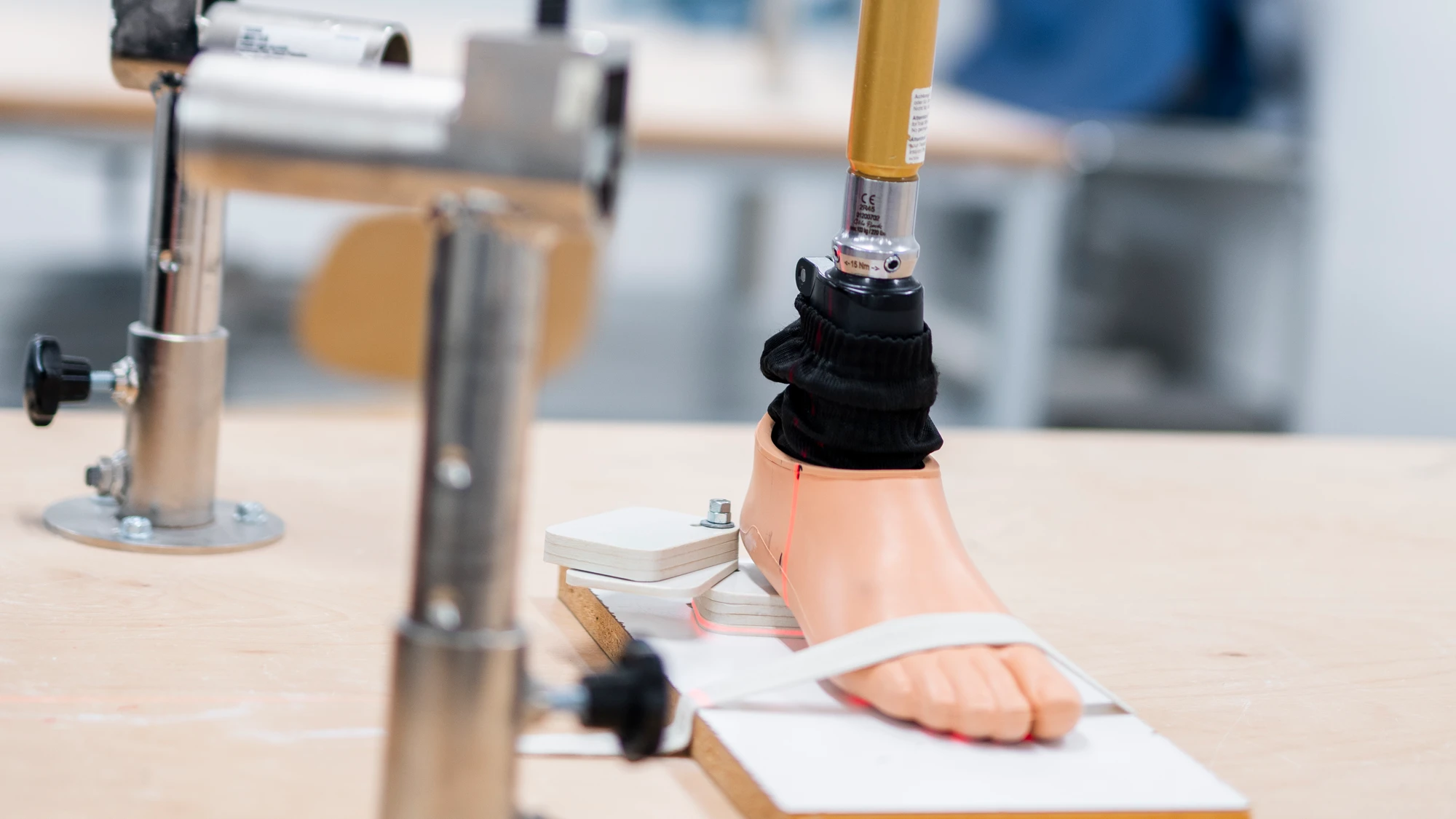
Foto: Vanessa Vera Forsberg
People living with an amputation currently face significant disparities in access to rehabilitation, prosthetic care, and follow-up care depending on where they live. Jönköping University will now lead an international research project aimed at identifying areas for improvement and contributing to more equitable, evidence-based, and person-centered care. The project has a budget of nearly 10 million euros spread over five years and is funded by Horizon Europe.
The project, called ThRIVE (Transforming Amputation Rehabilitation Through Inclusive, Value-Driven, Equitable Care), brings together 14 organizations from eight different countries. Throughout the project, researchers will examine how amputation rehabilitation is organized and delivered in different healthcare systems and identify factors that influence quality, accessibility, and patient experiences. Together with patients, healthcare professionals, and policymakers, they will develop tools and approaches that can support more equitable and evidence-based care.
“People living with an amputation need long-term rehabilitation and support with their prosthetic care throughout their lives. Today, there is often a lack of effective ways to assess whether care is delivering the outcomes that matter most to patients.” Through ThRIVE, we aim to develop common methods for measuring and monitoring the quality and value of care internationally, ” says Nerrolyn Ramstrand, professor of orthopedic technology at Jönköping University and project coordinator for ThRIVE.
Lot of experiences and perspectives
The project will involve people living with amputation, healthcare professionals, and policymakers to contribute their experiences and perspectives on what creates value in rehabilitation and what barriers exist in today’s healthcare system. This knowledge will be combined with registry data and analyses of healthcare organization, governance, and financing to identify opportunities to improve care. The insights from the project will be translated into concrete tools that can support improvements in amputee rehabilitation.
“I am very pleased to have the opportunity to lead this project. By bringing together patients, healthcare professionals, and policymakers from different countries, we can tackle challenges that no single country or organization can solve on its own,” says Nerrolyn Ramstrand.
Facts
The following organizations are participating in the project:
Jönköping University, Sweden
Uppsala University, Sweden
INAIL Centro Protesi, Italy
University Medical Center Groningen, the Netherlands
University of Salford, United Kingdom
University of Southampton, United Kingdom
Manchester University NHS Foundation Trust, United Kingdom
Sahlgrenska University Hospital/Västra Götaland Region, Sweden
Protez Hub, Ukraine
Kathmandu University, Nepal
Limb Care Nepal, Nepal
Exceed Prosthetics & Orthotics, Cambodia


